
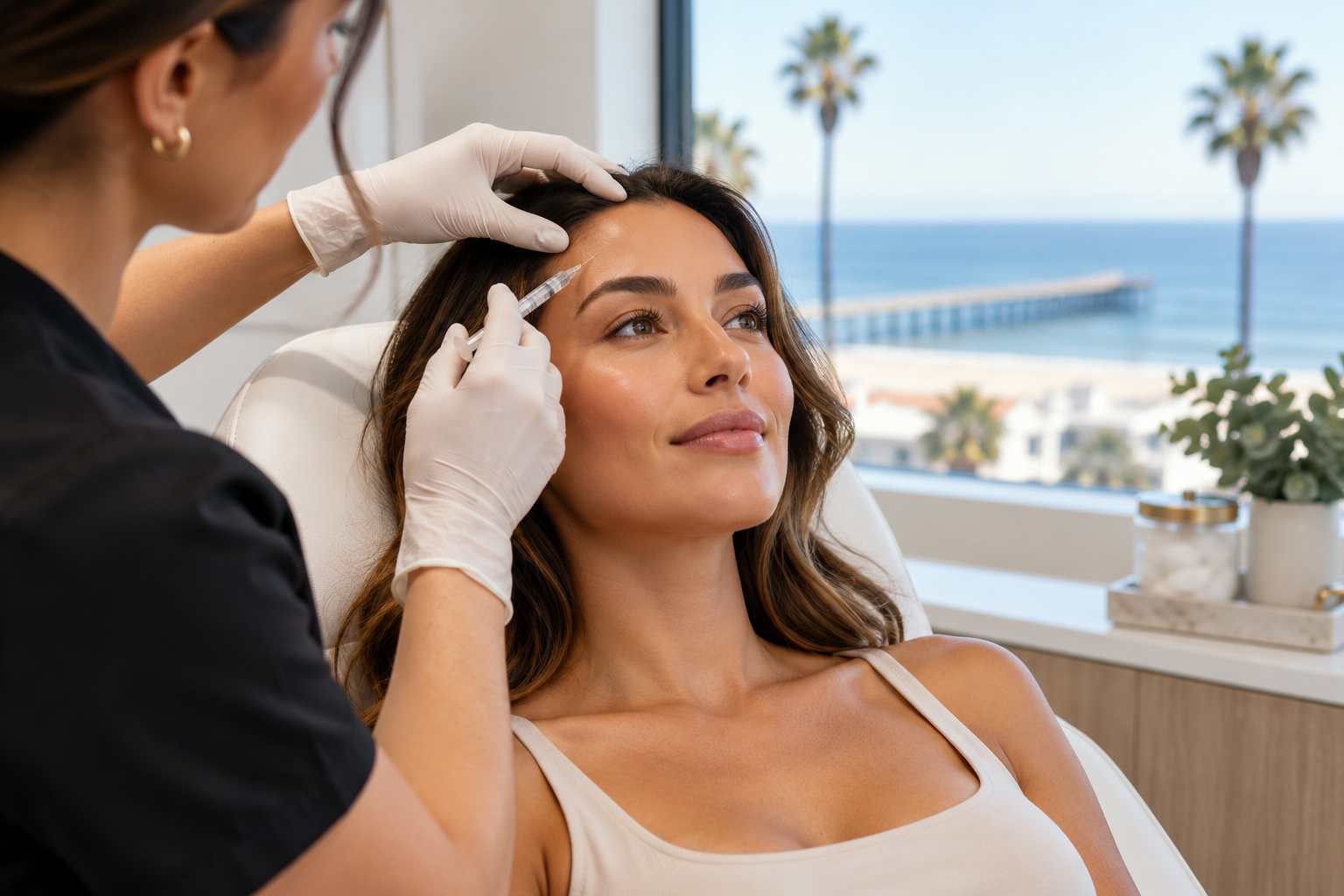
Medical-grade skin care services are in-clinic treatments that work below the surface layers your cleanser and serums can reach, using controlled stimulation and a provider's assessment to target a specific concern. At Swãe Medspa in Hermosa Beach, the skin care services currently listed are microneedling and melasma treatments, both planned around your skin type, your reactions to products and your home routine. If your skin has stopped responding to what you buy over the counter, that is usually the signal to get a professional look.
This guide covers which concerns medical skin care is built for, how to tell which direction fits you, and how to plan around work, events and a sun-heavy South Bay lifestyle.
What Counts as a Medical-Grade Skin Care Service?
A medical-grade skin care service is a treatment planned and overseen by licensed medical providers rather than a purely relaxation-focused spa facial. The difference is depth and intent. Home products mostly act on the top layer of skin, which is why Swãe's texture, scarring and pores page notes they rarely fix structural concerns on their own.
At Swãe, the two dedicated skin care services are:
- Microneedling: a device with very fine needles creates controlled micro-injuries that prompt the skin to build new collagen and elastin over the following weeks. Swãe's booking menu lists it as SkinPen microneedling.
- Melasma treatments: a gradual, layered program for the brown or grey-brown patches of melasma, combining a home regimen, sun protection and carefully chosen in-clinic sessions.
Swãe also offers laser-based skin resurfacing under its Lasers and Devices category, which is sometimes the better fit for sun damage and deeper texture.
Which Skin Concerns Do Skin Care Services Treat?
Swãe's skin care services address five common concerns: rough or uneven texture, uneven skin tone, acne and post-acne marks, sun damage, and dullness. Because each concern has different underlying causes, choosing the right treatment starts with understanding what is affecting your skin.
- Rough Texture, Enlarged Pores, and Dullness: Changes in skin cell turnover and collagen production can contribute to uneven texture and a lackluster complexion. Microneedling or skin resurfacing may help improve overall skin texture and appearance.
- Shallow Acne Scars: When collagen does not fully rebuild after acne heals, shallow scars may remain. Microneedling can help stimulate collagen production and gradually improve the appearance of certain acne scars.
- Dark Marks After Breakouts: Post-inflammatory hyperpigmentation can leave lingering discoloration after acne clears. Depending on skin type and individual needs, a personalized treatment plan may include microneedling and appropriate topical skin care.
- Melasma: Symmetrical patches of discoloration commonly appear on the cheeks, forehead, and upper lip. Because melasma is influenced by factors such as hormones, heat, and sun exposure, it requires a carefully selected treatment approach.
- Sun Spots and Sun Damage: Years of UV exposure can contribute to visible dark spots and uneven pigmentation. Skin resurfacing may help improve certain signs of sun damage, depending on the type and depth of pigmentation.
Although sun spots and melasma can appear similar, they often require different treatment approaches. As explained on Swãe's Pigmentation and Sun Damage page, certain treatments that improve sun spots may worsen melasma. This is why a professional skin assessment is important before selecting a treatment.
How Do I Know Whether I Need Microneedling or Melasma Treatment?
The short answer: microneedling is mainly for structure (texture, shallow scars, pores and fine lines), while melasma treatment is for a specific, hormone- and heat-sensitive pigment pattern. If your main concern is a patchy, symmetrical brown mask that darkens every summer, melasma care is the likelier starting point. If it's bumpy texture or pitted acne scars, microneedling usually is.
Many people have more than one concern. In that case, your provider decides the order. For example, Swãe's melasma program can include microneedling as one of its in-clinic add-ons once the skin has adjusted to a home regimen, but it is spaced carefully because heat and irritation can trigger more pigment.
You don't need to arrive with a diagnosis. Swãe's FAQ page says you can simply describe what bothers you, and the provider will assess the cause and recommend a plan, including telling you if a treatment isn't right for your goal.
Gen Z and Younger Adults: What About Acne and Acne Marks?
For many people in their twenties, the frustration isn't wrinkles. It's breakouts and the marks and scars they leave behind. Swãe's skin care page states that acne is treated, including the marks and scarring it leaves.
Timing matters here. The American Academy of Dermatology notes that acne scar treatment typically begins once acne is under control, and Swãe's microneedling page says the treatment isn't recommended over active acne, eczema or rosacea flares, or for anyone who has taken isotretinoin in the past six months. If you're still breaking out, your provider will factor that in before recommending scar-focused treatment. It's also worth knowing that the FDA's authorizations for microneedling devices to improve the appearance of facial acne scars apply to adults 22 and older.
It also helps to separate two things people often call "acne scars":
- Flat dark or red marks left after a pimple heals, which are pigment or redness rather than true scarring.
- Indented scars, such as shallow rolling and boxcar scars, which are a loss of collagen. Swãe's microneedling page names these as a focus.
Each responds to a different plan, which is why the assessment comes first.
Busy Professionals: How Much Downtime Do Skin Care Services Need?
Most medical skin care services fit around a work schedule, but they are not all "walk out and go to a meeting" treatments. Swãe's skin care page notes that gentler services have little downtime, while deeper treatments such as microneedling can bring a few days of redness or flaking. The microneedling page covers that recovery and aftercare in detail.
How far ahead should I book before an event?
Swãe's guidance is to book gentler treatments a few days before an event and to allow one to two weeks for deeper treatments such as microneedling. If you have a wedding, conference or photo shoot coming up, build your schedule backward from that date. A series started a few months out gives you more room than a single last-minute session.
How often will I need appointments?
Swãe says most people can return every four to six weeks, depending on the treatment. Concerns like scarring and melasma are usually addressed over a series of visits rather than a single appointment, so ask your provider for a realistic timeline at your first visit.
Men: Is Medical Skin Care Worth It if I Barely Have a Routine?
Yes, especially if your concerns are texture, large pores, old acne scarring or sun damage from years of surfing, volleyball or running without consistent sunscreen. Medical skin care services do the corrective work, so your at-home routine can stay simple: a gentle cleanser, a moisturizer and sunscreen are a solid foundation for most people.
The main adjustments are practical. Most in-clinic treatments come with a short list of things to pause for a few days, such as workouts, swimming or strong active ingredients. If you shave, ask your provider how to handle it around your session.
Is Medical Skin Care Safe for Darker or Sensitive Skin?
Swãe's skin care page emphasizes care for all skin types, including darker, sensitive and acne-prone skin, and notes that some treatments carry a higher risk of pigmentation changes on darker skin tones. That honesty matters.
Microneedling doesn't rely on heat or light, so it is often considered an option for skin tones where some lasers carry pigmentation risk. Still, the U.S. Food and Drug Administration notes that microneedling may not be suitable for everyone, including some people with darker skin types, because of the risk of skin darkening or lightening. "Lower risk" is not the same as "no risk," so your provider should explain your specific risks before you commit to a plan.
Why Does Sun Protection Matter So Much in the South Bay?
UV exposure is one of the main drivers of the concerns medical skin care treats. MedlinePlus notes that UV rays can cause wrinkles and skin spots and can damage skin during any season, not just summer. For people who spend weekends at the beach, play volleyball on the sand or run along the Strand, that exposure adds up over the years.
Sun protection also protects your results. The American Academy of Dermatology recommends a broad-spectrum sunscreen with SPF 30 or higher, and Swãe asks patients to use SPF 30 or higher after microneedling and daily tinted mineral sunscreen as part of its melasma program. Without it, pigment and texture concerns tend to creep back.
Frequently Asked Questions About Skin Care Services
What skin care services does Swãe offer?
Swãe's skin care category currently lists microneedling and melasma treatments. Swãe also offers laser-based skin resurfacing in its Lasers and Devices category.
Do I need to know which treatment I want before booking?
No. Every new patient has an in-person Good Faith Exam with a physician assistant before treatment. You describe your concerns, and the provider recommends a plan.
Can I combine more than one skin treatment?
Often, yes. Swãe's FAQ notes that some treatments can be done in the same visit while others are better spaced a few weeks apart, and your provider plans the order and timing.
Will I have to change my skin care routine?
Possibly. Swãe notes that home routines may need small adjustments before and after treatment, such as briefly pausing strong active ingredients.
Can I get skin treatments before a big event?
Yes, with planning. Allow a few days for gentler services and one to two weeks for deeper treatments such as microneedling.
Does insurance cover medical skin care services?
Cosmetic skin treatments are generally elective and are usually not covered by insurance. Check with your insurer if you're unsure.
Book a Skin Care Consultation in Hermosa Beach
If your skin has plateaued with store-bought products, an assessment is the most efficient next step. Swãe Medspa is located at 49 Pier Ave., Unit #2A, upstairs in Hermosa Beach, and sees patients from Manhattan Beach, Redondo Beach and across the South Bay. Explore Swãe's skin care services or contact the team to book your Good Faith Exam.
This article is for general education and does not replace an in-person medical evaluation.