
Melasma Treatments
A Careful Approach to a Stubborn Condition
Melasma is different from ordinary sun spots. It's driven by a mix of hormones, sun exposure and heat, which is why it often appears during pregnancy or with hormonal birth control and tends to flare in summer. The pigment sits in both the surface and deeper layers of the skin, and the cells that produce it are unusually reactive. That's the catch with treatment. Anything that irritates or heats the skin too much can trigger those cells to make more pigment, so aggressive lasers and harsh peels often backfire.
At Swãe, we treat melasma by combining gentle in-clinic treatments with a prescription-strength home routine and strict sun protection. Progress is gradual, but done this way it holds.

How We Treat Melasma
Melasma treatment is a program rather than a single appointment. Here's how it typically runs.
Your provider examines the pigment under different lighting to judge how deep it sits, asks about hormones, sun habits and past treatments, and rules out other causes of pigmentation.
Before any in-clinic treatment, we start you on a regimen that usually includes a pigment-suppressing agent, a gentle exfoliant and daily tinted mineral sunscreen. This does much of the heavy lifting.
Once your skin has adjusted, we add gentle treatments such as light chemical peels, microneedling or low-energy device sessions to speed up clearing, spaced several weeks apart.
Melasma can return with sun or hormonal shifts, so we set up a maintenance plan and check in on how your skin is doing over time.
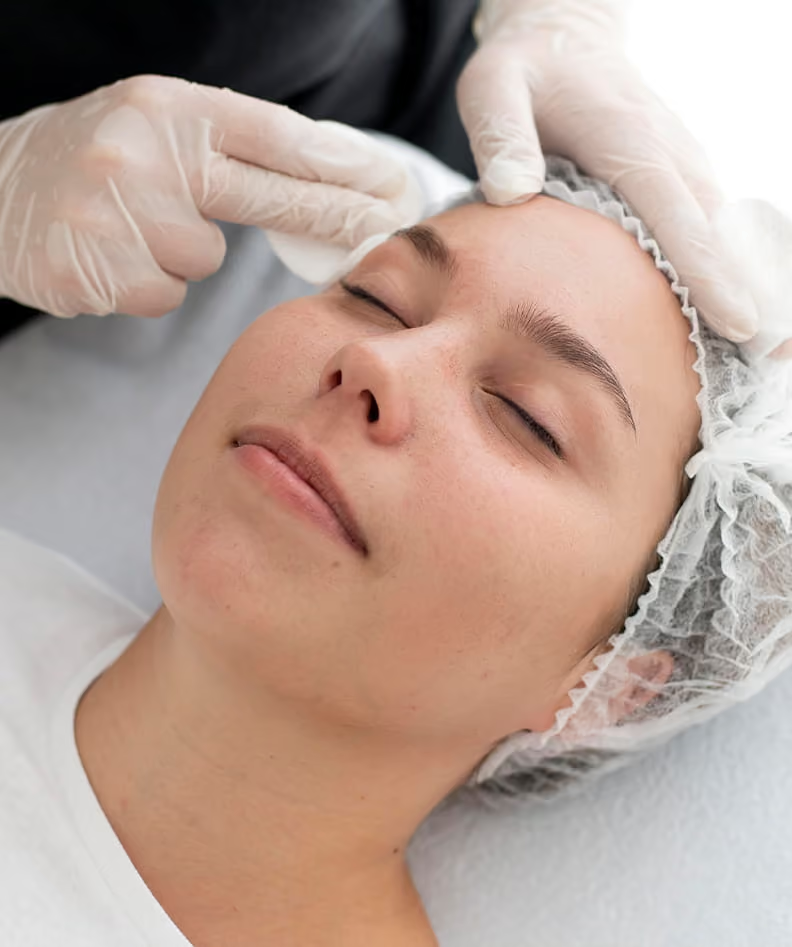
Is Melasma Treatment Right for You?
If you've been told you have melasma, or you suspect it, a consultation is the first step. You're likely a good candidate if:
- You have symmetrical brown or grey-brown patches on your cheeks, forehead, upper lip or chin
- The pigment darkened during pregnancy or after starting hormonal birth control
- Your patches get noticeably worse in summer or after sun exposure
- Over-the-counter brightening products haven't made a lasting difference
- Previous treatments cleared the pigment temporarily but it came back
- You're willing to commit to daily sunscreen and a home routine, since treatment won't hold without them
Melasma treatment is best delayed if you're currently pregnant, and some in-clinic options may be adjusted if you're breastfeeding. Your provider will plan around this.
Why Patients Choose Swãe for Melasma Treatment
The right approach makes the difference between pigment that fades and pigment that keeps coming back darker.
Caring for Your Skin After LaseMD Ultra™ for Melasma
After an Ultra™ session, your skin will be pink and slightly sensitive for a day or two. With melasma, though, aftercare does not end there. Sun protection and daily skin care are part of the treatment itself, because heat and UV exposure are what drive the pigment in the first place.
Before & After Results
Any Questions?
Can melasma be cured?
It can be significantly faded and controlled, but not permanently cured. The pigment cells stay reactive, so ongoing sun protection and maintenance are needed to keep it clear.
Why did previous laser treatments make it worse?
Heat and irritation from aggressive treatments can stimulate the pigment cells to produce more melanin. That's why we use gentler, lower-energy approaches.
How long before I see results?
Most people notice lightening within six to twelve weeks of starting a home routine, with continued improvement over three to six months as in-clinic treatments are added.
Is treatment safe during pregnancy?
We recommend waiting until after pregnancy for most treatments, since hormones are actively driving the pigment. Sunscreen and gentle skin care are safe throughout.
Will sunscreen alone fix it?
Sunscreen prevents melasma from getting worse and is essential to treatment, but on its own it won't fade existing pigment. Combined with the right actives and treatments, it makes a big difference.
Why do I need a home routine if I am getting in-clinic treatments?
The daily products keep the pigment cells suppressed between visits. Without them, in-clinic treatments give only temporary results.
What Our Patients Say

Why Patients Stay With Swãe
Choosing a medspa usually comes down to whether you trust the person planning your care. At Swãe, that person is a licensed provider who has examined you in person, taken time to understand what you want to change, and explained the options before anything is booked. The result is care that feels considered rather than transactional.