
Vein Removal
Clearer Legs and Face, Without Surgery
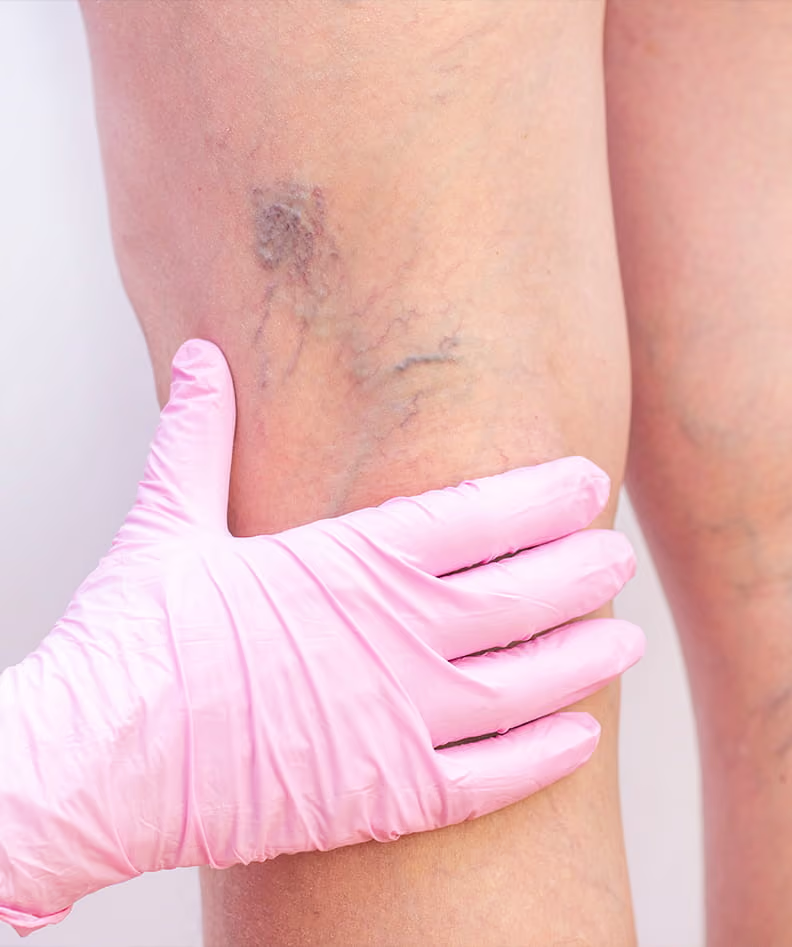
Spider veins and small varicose veins appear when tiny blood vessels near the surface of the skin weaken or become dilated.
On the legs, this often comes from pressure, standing for long periods, pregnancy or simple genetics. On the face, sun damage and conditions like rosacea are the usual causes. These veins don't serve an important function, so closing them off is safe. Treatment works by damaging the vein wall, either with laser energy absorbed by the blood inside the vein or with a solution injected directly into it. The vein collapses, blood reroutes through healthier vessels, and over the following weeks the body absorbs what's left.
Laser is usually the better choice for facial veins and very fine leg veins, while injection treatment, known as sclerotherapy, handles larger leg veins more effectively. At your consultation, we'll recommend the approach that fits your veins.
What Happens at a Vein Removal Appointment
Sessions take 15 to 45 minutes depending on the area and how many veins are treated.
Your provider examines the veins, checks their size and depth, and asks about symptoms like aching or heaviness that might suggest a larger underlying issue. If needed, we'll refer you for a vascular assessment before treating.
The area is cleansed and, for laser treatment, a cooling gel may be applied. Numbing isn't usually required for either method.
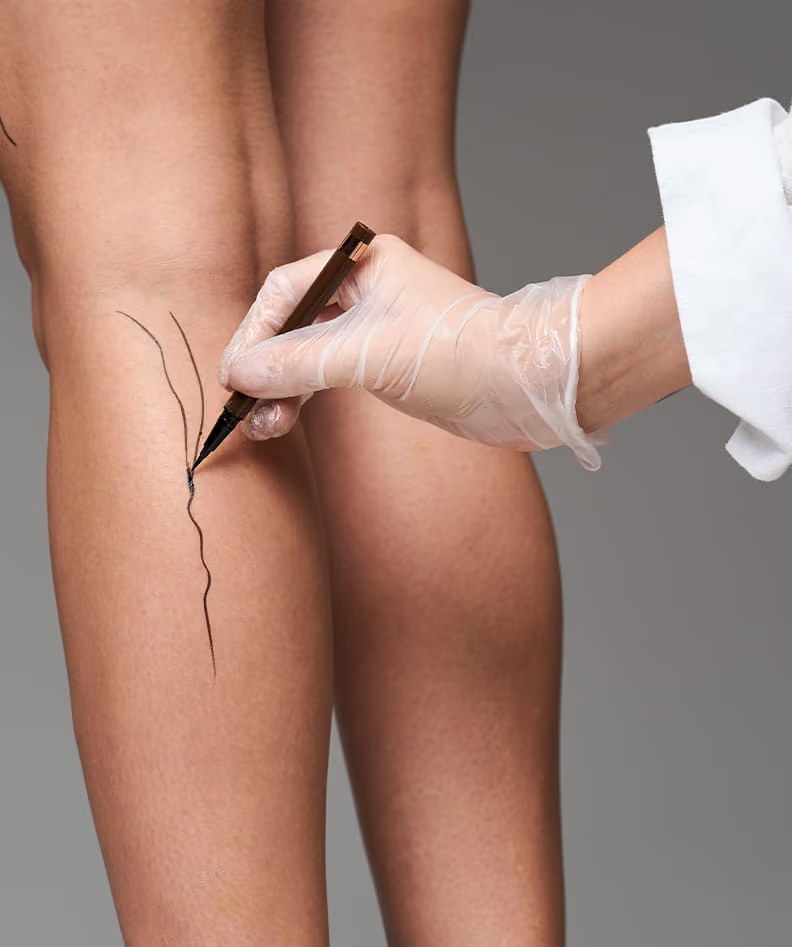
With laser, pulses of light are delivered along each vein. With sclerotherapy, a very fine needle injects the solution into the vein and the provider watches it fade. You may feel a warm snap or a mild cramping sensation.
For leg treatments, you'll wear compression stockings for several days to help the veins close. We review results at six to eight weeks and schedule further sessions if needed.
Is Vein Removal Right for You?
Vein removal is well suited to small surface veins that are cosmetic rather than a sign of deeper circulation problems. You're likely a good candidate if:
- You have red, blue or purple spider veins on your thighs, calves or ankles
- You have small visible veins around your nose, cheeks or chin
- Your veins are cosmetically bothersome but don't cause significant pain or swelling
- You're in good general health and not pregnant
- You're able to wear compression stockings and avoid heavy exercise for a few days after leg treatment
- You understand that new veins can form over time and occasional maintenance may be needed
If you have large, bulging varicose veins, leg swelling or a history of blood clots, your provider may refer you for a vascular assessment first, since those can indicate an underlying condition that needs different treatment.
Why Patients Choose Vein Removal
Vein treatment is quick, effective and one of the few aesthetic procedures where the concern clears completely rather than just improving.
Caring for Your Skin After Vein Removal
Aftercare is about helping the treated veins close fully and protecting the skin while any bruising or redness settles.
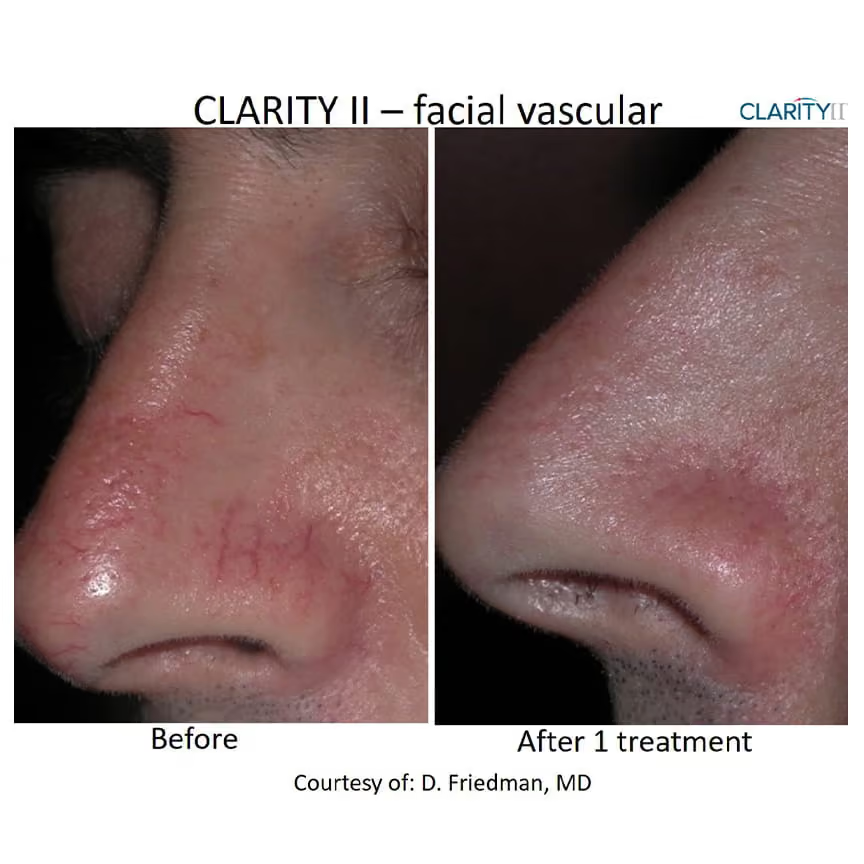
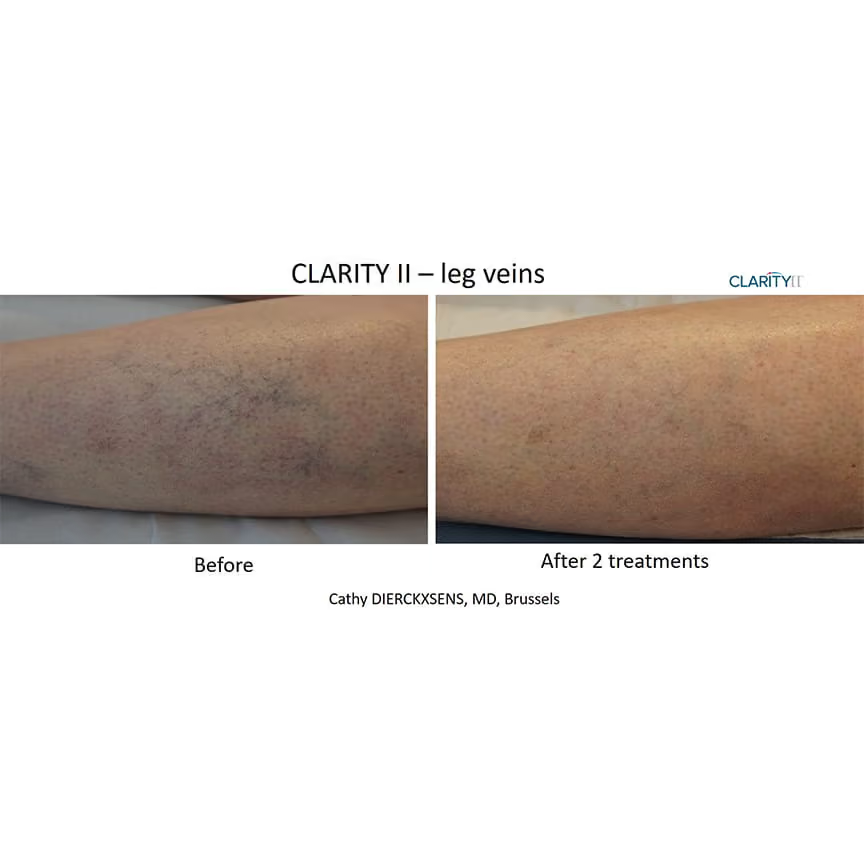
Before & After Results
Any Questions?
Does vein removal hurt?
Laser feels like brief warm snaps, and sclerotherapy involves a small pinch followed by mild cramping or stinging that passes quickly. Neither usually needs numbing.
How many sessions will I need?
Facial veins often clear in one to two sessions. Leg veins typically need two to four sessions, spaced six to eight weeks apart.
When will I see results?
Facial veins often fade within a week or two. Leg veins take longer to be absorbed, with most clearing visible at six to eight weeks and continuing to improve over a few months.
Will the veins come back?
Treated veins are permanently closed and don't return. New veins can develop over time, especially if the underlying causes like standing or genetics continue, so occasional maintenance may be needed.
Is vein removal safe?
Yes, for the small surface veins we treat. If your provider suspects a deeper vein problem, they'll refer you for assessment before treatment.
What are the side effects?
Temporary redness, bruising, mild swelling or small dark marks along the treated vein are common and clear within a few weeks. Rarely, brown staining can persist longer, which is why sun protection matters.
What Our Patients Say

Why Patients Stay With Swãe
Choosing a medspa usually comes down to whether you trust the person planning your care. At Swãe, that person is a licensed provider who has examined you in person, taken time to understand what you want to change, and explained the options before anything is booked. The result is care that feels considered rather than transactional.